


 Français
  Türkçe
 Voice Feminization Surgery Success Rate What Does Data Say?
Voice feminization surgery (VFS) is a surgery that has psychosocial as well as functional effects, especially for trans women, to make the voice perceived more feminine. However, the question that patients are most curious about is usually the same: What is the success rate of voice feminisation surgery?
It should be noted from the beginning that this question is not answered with a single percentage in the scientific literature. Because 'success' is not based on a single criterion as in aesthetic surgeries; It is evaluated based on multiple criteria such as voice frequency increase, patient satisfaction and permanent effect.
How is success rate of voice feminization surgery measured?
In scientific studies, VFS success is generally analysed under three main headings:
- Speaking Fundamental Frequency (SF0)
- Patient-reported outcomes (questionnaires such as TWVQ)
- Complication and revision rates
Therefore, it is scientifically more accurate to talk about measurable clinical gains rather than clear rates such as '90% successful'.
Sound frequency increase according to scientific studies
Systematic reviews and clinical studies, especially after Wendler glottoplasty:
Permanent speech frequency increase in the average range of 20-60 Hz,
It shows that the voice of the majority of patients is perceived as more feminine in everyday life.
An important point is the following: This increase is maintained not only immediately after surgery, but also at 6-12 months follow-up. This shows that the surgery is not temporary but long-term effective.
In most of the scientific publications, the rate of reaching the 160-180 Hz band, which is considered the critical threshold for perceiving the voice as feminine, is quite high.
Patient satisfaction: Key success indicator
One of the most powerful data when evaluating the success rate of voice feminization surgery is patient satisfaction surveys.
The results of the Trans Woman Voice Questionnaire (TWVQ), specially developed for trans women, show that
Patients' confidence in self-expression increases after surgery
Anxiety is significantly reduced in telephone conversations and social interactions
'My voice is compatible with my identity' is one of the most common feedbacks after surgery
Scientific studies have reported statistically significant and clinically significant improvement in TWVQ scores. This demonstrates that VFS is not only a technical intervention but also an intervention that directly affects quality of life.
Complication and revision rates
When assessing the success rate, the risks must also be clearly discussed.
According to published studies:
- Low rate of serious complications
- Temporary hoarseness or voice fatigue may occur in the first weeks
- The need for revision occurs in a limited group of patients
It is emphasised that in cases supported by correct patient selection, experienced surgeon and postoperative voice therapy, negative outcomes are significantly reduced.
In a nutshell what does the success rate of voice feminization surgery mean?
To summarise the scientific literature in one sentence:
Voice feminization surgery is a surgery that is considered successful with permanent voice frequency increase, high patient satisfaction and low complication rates when applied in the appropriate patient and with the correct technique.
But success:
- Cannot be reduced to a single percentage
- Requires setting goals that are in line with the patient's expectations
- In most cases, surgery + voice therapy gives the best results when evaluated together
Therefore, the success rate of voice feminization surgery should be defined by measurable results and patient experience rather than numbers.
Clinical note:
This content is for informational purposes. Vocal anatomy, expectations and surgical suitability are different for each patient. The exact evaluation should be made by face-to-face examination and detailed voice analysis.
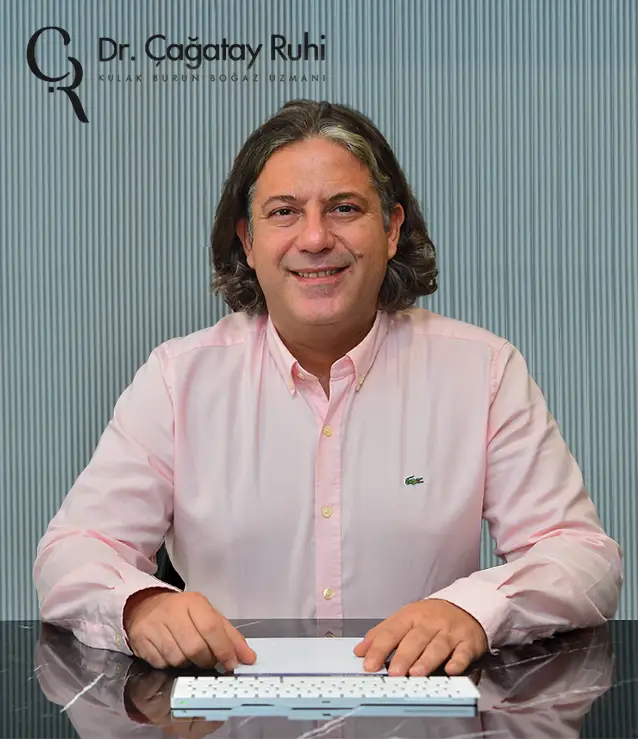
Op. Dr. Çağatay Ruhi
ENT Specialist · Rhinoplasty Surgeon
Graduate of Hacettepe University Faculty of Medicine. Practicing ENT and rhinoplasty in Istanbul Kadıköy since 2011. Specialized in rhinoplasty, revision rhinoplasty, preservation rhinoplasty and piezo surgery with over 5,000 successful cases.