


 Français
  Türkçe
 Nasal Congestion Treatment
Istanbul
A blocked nose sounds like a small complaint. Most of the time it is: a cold, an allergy, something that clears up in a week. But when a patient says "my nose has been blocked for years," or "the same side is always worse," or "I sleep with my mouth open," that's a different conversation. There's probably a structural problem behind it.
This page is about the surgical treatment of chronic or recurring nasal congestion. If you're looking for home remedies, take a look at our how to get rid of a blocked nose page instead.

When does congestion need surgery?
Not every blocked nose calls for an operation. Most don't. But there are conditions where home remedies, medications, and sprays simply won't solve the problem:
- Septum deviation (the central wall of the nose is crooked)
- Turbinate hypertrophy (the structures inside the nose are enlarged)
- Nasal polyps
- Enlarged adenoids (particularly in children)
- Post-trauma nasal damage
- Chronic sinusitis
In these cases, the issue is structural. No spray will fix it long-term. Surgical correction becomes necessary.
How is the ENT evaluation done?
Endoscopic examination
Using a thin camera (endoscope), the inside of the nose is examined in detail. Is the septum deviated? Are the turbinates enlarged? Any polyps? Are the sinus openings clear? Endoscopy answers all of these.
Imaging
If there are signs of sinus issues, polyps, or other structural concerns, a CT scan is requested. It shows both soft tissue and bone structure. For sinus surgery planning, the operation isn't planned without a CT.
Airflow assessment
Objective tests measure how much obstruction is actually present. A patient's perception of blockage and the measured obstruction don't always match perfectly. These tests bridge the gap.
Structural causes and their treatments
Septum deviation and septoplasty
When the central wall of the nose (septum) is bent, airflow is restricted on one side. This can be congenital or due to trauma. Patients typically say "one nostril is always blocked."
The treatment is septoplasty. It's done through a small incision inside the nose, invisible from outside. The bent cartilage and bone are straightened. The external appearance of the nose does not change. If there's also an aesthetic concern, septoplasty can be combined with rhinoplasty in the same session. The surgery typically takes 1 to 1.5 hours under general anesthesia.
Recovery: One week of rest is advised. Return to social life in about 10 days. Full healing takes 1 to 2 months.
Turbinate hypertrophy: radiofrequency or turbinate surgery
Turbinates are structures inside the nose that warm, humidify, and filter air. When allergies, chronic irritation, or other factors enlarge them, airflow gets blocked.
The treatment in mild cases is radiofrequency (RF). The turbinates are reduced under local anesthesia in 10 to 15 minutes. In more advanced cases, a microdebrider is used for surgical turbinate reduction.
Recovery: 2 to 3 days back to normal life after RF, about a week after surgical reduction.
Nasal polyps and polyp surgery
Polyps are benign, grape-like growths from the nasal mucosa. They usually develop on an allergic or chronic inflammatory base.
Initial treatment is medical: corticosteroids and antihistamines. When that's not enough, endoscopic polypectomy is performed. The polyps are removed with endoscopic instruments.
Important: polyps tend to recur. So follow-up with steroid sprays or immune treatment is essential. "Removed them once, done" is misleading. Polyps require chronic management, not a one-time fix.
Enlarged adenoids and adenoidectomy
Mostly seen in children. Enlarged adenoids cause chronic nasal congestion, mouth breathing, sleep disturbances. They also predispose to recurrent ear infections.
The treatment is adenoidectomy. The adenoids are removed in a short surgical procedure. Often performed together with tonsillectomy in the same session.
Chronic sinusitis and endoscopic sinus surgery
When sinuses repeatedly become inflamed and medical treatment isn't enough, endoscopic sinus surgery may be needed. The sinus openings are widened, drainage pathways are opened, polyps if present are removed.
Recovery: One week of rest, 2 to 3 weeks of regular nasal irrigation. Full recovery in 1 to 2 months.
After surgery
Whichever procedure you have, the first week is the most important. A few key principles:
- First 24 to 48 hours: rest, head elevated
- Frequent saline irrigation (as your surgeon directs)
- Open your mouth when sneezing (to reduce pressure)
- No smoking, alcohol, or spicy food for 2 weeks
- No sports or heavy lifting for 4 weeks
- Don't blow your nose for the first 2 weeks
What's normal: mild pain (managed with painkillers), swelling, temporary voice changes, temporary reduced smell and taste. These pass.
What's not normal: heavy bleeding, fever, severe pain. Contact your surgeon immediately if these occur.
What happens if you don't treat it?
Untreated chronic nasal congestion isn't a minor issue. It's not just about comfort:
- Sleep is disrupted; sleep apnea may develop
- Constant mouth breathing affects jaw and dental development (especially in children)
- Chronic headaches and daytime fatigue
- Concentration problems
- Long-term cardiovascular risks from untreated sleep apnea
- Permanent reduction in smell and taste
"I've gotten used to it" isn't an answer. Chronic congestion is a real health issue, and it deserves proper treatment.
Which surgery is right for you?
That's decided in the consultation. What's the cause of the obstruction? What structural issues are present? What's the patient's general health and expectations? It all comes together in a personal plan.
Some patients need just one procedure (septoplasty alone). Others need a combination (septoplasty + turbinate RF + polyp surgery in one session). The plan is custom to the patient.
Op. Dr. Çağatay Ruhi has over 5,000 nose surgeries experience. Get in touch to discuss the right treatment plan for you.
Frequently asked questions
Surgery may be necessary when there is a structural cause behind the congestion: septum deviation, turbinate hypertrophy, nasal polyps, enlarged adenoids, post-traumatic nasal damage, or chronic sinusitis. In these cases, medications and sprays cannot provide a long-term solution.
Septoplasty is the surgical correction of a deviated septum (the central wall of the nose). It is performed through an internal incision, invisible from outside, so the external appearance of the nose does not change. The surgery takes 1 to 1.5 hours under general anesthesia. Recovery takes 1 to 2 months.
Turbinate radiofrequency (RF) is a minimally invasive procedure for enlarged turbinates. It is performed under local anesthesia and takes about 10 to 15 minutes. RF energy reduces the turbinate tissue and improves airflow. Patients return to normal life within 2 to 3 days.
Yes, nasal polyps can recur. Long-term follow-up with steroid sprays or immune treatment is essential to manage the underlying inflammation. Polyps are a chronic condition that requires ongoing management, not a one-time procedure.
No, the surgery is performed under anesthesia, so there is no pain during the procedure. Post-operative discomfort is usually mild to moderate and is controlled with prescribed pain relievers. Most patients describe a sensation of pressure rather than actual pain.
Untreated chronic congestion can lead to sleep apnea, persistent mouth breathing (which affects jaw and dental development in children), chronic headaches, daytime fatigue, concentration problems, and long-term cardiovascular risks from sleep apnea. It may also reduce sense of smell and taste permanently.
Yes, septoplasty (functional correction) and rhinoplasty (cosmetic reshaping) can be combined in a single session, called septorhinoplasty. This opens the airway and improves the external appearance of the nose at the same time, sparing the patient from two separate surgeries.
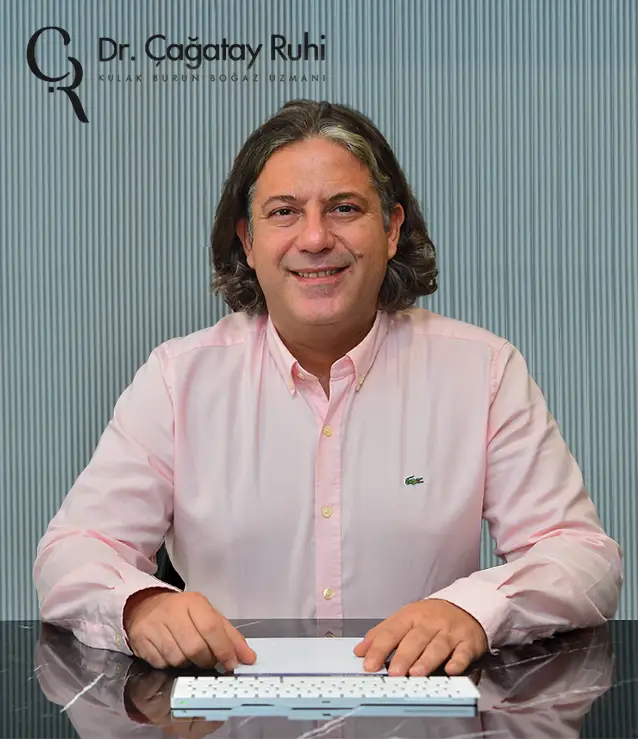
Op. Dr. Çağatay Ruhi
ENT Specialist · Rhinoplasty Surgeon
Graduate of Hacettepe University Faculty of Medicine. Practicing ENT and rhinoplasty in Istanbul Kadıköy since 2011. Specialized in rhinoplasty, revision rhinoplasty, preservation rhinoplasty and piezo surgery with over 5,000 successful cases.