

 Français
  Türkçe
 12 Things Nobody Tells You Before Choosing a Rhinoplasty Surgeon in Turkey Dr. Çağatay Ruhi
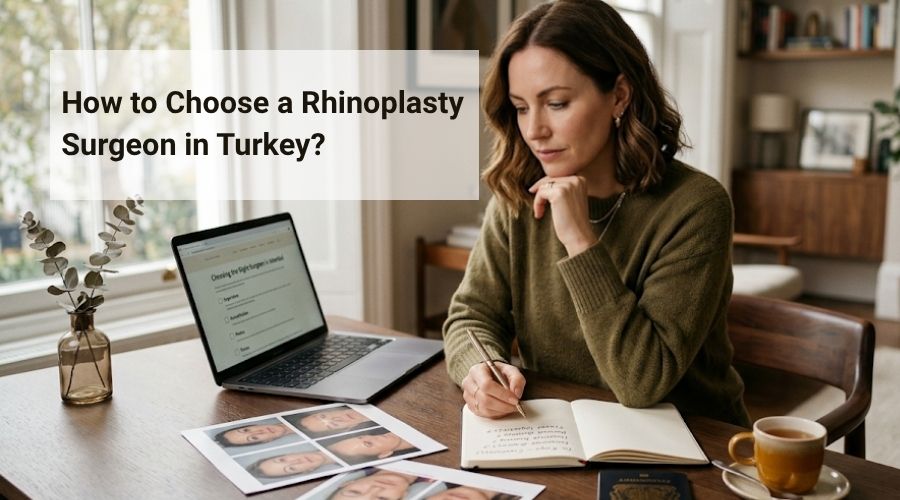
A no-nonsense guide for British patients who want brilliant results — not a cautionary tale
So you've done the research. You've seen the price comparisons, watched a few YouTube vlogs, and scrolled through enough before-and-after photos to last a lifetime. Istanbul is on your shortlist, and honestly, with good reason — the city has become one of the world's most respected destinations for cosmetic surgery, hair transplants, and aesthetic medicine. The quality can be genuinely exceptional.
But here's the thing nobody puts in the brochure: the gap between the best clinics in Istanbul and the ones you absolutely want to avoid is enormous. And the marketing on both sides looks almost identical.
This guide is for anyone who wants to do it properly. Not cheaply, not impulsively — properly. Think of it as the honest chat you'd want from a savvy friend who's already been through the process and learned a few things the hard way.
1. Board certification isn't a bonus — it's the baseline
Before anything else, verify your surgeon's credentials. In Turkey, you should be looking for certification from the Turkish Board of Plastic, Reconstructive and Aesthetic Surgery, or membership of ISAPS — the International Society of Aesthetic Plastic Surgery. These aren't vanity titles; they represent years of rigorous postgraduate training, examinations, and ongoing peer accountability.
If a clinic cannot readily produce their surgeon's credentials, or if they get cagey when you ask, walk away. It doesn't matter how polished their website is, how many reels they've posted, or how competitive their pricing looks. Credentials are non-negotiable. Full stop.
2. Instagram is a highlight reel — not a portfolio
Let's be blunt: every clinic in Istanbul has a curated Instagram feed full of flawless results. Nobody posts the complications, the revisions, or the patients who are quietly devastated. Social media is a marketing channel, not an honest audit of a surgeon's work.
When you're seriously evaluating a surgeon, ask them — directly — for a broader range of before-and-after photographs across different patient types and anatomies. Better still, ask whether you can speak with previous patients who've consented to share their experiences. A clinic that's genuinely proud of its outcomes won't hesitate. One that's hiding something usually will.
3. Google your surgeon's name in Turkish
This one is a genuine insider tip that most people overlook entirely. Run your surgeon's name through a Turkish-language Google search and use Google Translate to read the results. You'll often find a completely different picture to the polished English-language reviews the clinic presents to international patients.
Local Turkish patients have no reason to soften their feedback for a foreign audience. What they write — good or bad — tends to be far more candid. It takes ten minutes and it could save you an enormous amount of grief.
4. Ask about revision rates — and watch how they react
Every surgeon, no matter how talented, encounters cases that require revision. The human body is unpredictable; healing is never entirely linear. A surgeon who confidently and transparently discusses their revision rate — how often it happens, why, and what the process looks like — is demonstrating exactly the kind of honesty you want in an operating theatre.
On the other hand, if your surgeon claims they've never had a complication or a case requiring follow-up work, that's a significant red flag. It either means they're being dishonest, or they're not operating in enough volume to have encountered the full spectrum of outcomes. Neither is reassuring.
5. A proper consultation tells you more than fifty whatsapp messages
If a clinic is happy to quote you and book you in based on a handful of photos sent via WhatsApp, be very cautious indeed. That's not a consultation — it's a transaction.
A genuine pre-operative consultation, even conducted virtually via video call, should involve the surgeon assessing your individual anatomy, discussing realistic expectations, explaining their proposed approach, and giving you the space to ask questions without feeling rushed. That fifteen-minute conversation will reveal more about a surgeon's competence and character than any amount of back-and-forth messaging.
6. Ask exactly what happens if something goes wrong
Before you commit to anything, ask the clinic this question directly: what is your aftercare and complication protocol for international patients?
A reputable clinic will have a clear answer. They'll explain their follow-up process, whether revision surgery is covered, how they communicate with patients once they've returned to the UK, and who you contact if you have concerns in the weeks after your procedure. A vague or dismissive response to this question should set alarm bells ringing. The clinics worth trusting are the ones who've clearly thought this through — because they care about outcomes, not just bookings.
7. Cross-reference your reviews — always
Don't rely on a single source. Ever. A clinic's own website is, by definition, going to present the most favourable impression possible. Instead, triangulate: check Google Reviews, WhatClinic, Trustpilot, RealSelf, Reddit threads (communities like r/PlasticSurgery can be invaluable), and Facebook groups for UK patients who've had procedures abroad.
If a clinic has hundreds of glowing five-star reviews on their own site but virtually no presence or footprint on independent platforms — or if their independent reviews seem oddly generic and suspiciously uniform — something doesn't add up. Do your homework.
8. Price comparison is the last thing you should do
Yes, the cost savings available in Istanbul compared to the UK are real, and for many patients they're genuinely life-changing. A procedure that might cost £8,000–£12,000 in London can often be undertaken at a fraction of that price in Istanbul — without any compromise in quality, at the better clinics.
But — and this is crucial — price should be the very last criterion you apply, not the first. Shortlist surgeons who meet every other standard on this list first: credentials, consultation quality, transparency, patient outcomes, aftercare protocols. Then compare pricing between those shortlisted options. The cheapest option almost never represents the best value, especially when you factor in the potential cost — financial, physical, and emotional — of a result that requires corrective work.
9. Trust your instincts during the consultation
This point sounds soft, but it's actually one of the most reliable signals available to you. Pay attention to how a surgeon makes you feel during your consultation.
The best surgeons are calm, unhurried, and refreshingly honest about limitations. They won't promise you perfection. They won't pressure you to book before you've had time to think. They won't become defensive if you ask challenging questions. They'll treat you as an intelligent adult capable of making an informed decision — because they're confident enough in their own work to let it speak for itself.
If anything about the interaction feels pushy, evasive, or just a bit off, trust that instinct. It's data, not paranoia.
10. Be wary of comparison sites that clinics can pay to top
This is something that catches a lot of people out, and it's worth understanding before you start your research. A significant number of "medical tourism comparison platforms" are, at their core, paid advertising directories. Clinics pay to appear at the top of the listings, to have negative reviews suppressed, or to boost their overall scores. The "number one ranked clinic" on these sites isn't necessarily the best — it's often simply the one with the biggest marketing budget.
For honest, unmanipulated feedback, stick to platforms where clinics have no ability to pay their way to a better position. WhatClinic and Google Reviews operate independent verification systems that make it significantly harder for businesses to game results. Reddit communities and verified patient forums are similarly difficult to manipulate at scale, because real patients with real experiences tend to be quite vocal — and quite difficult to silence.
The extra time it takes to seek out genuine, independent patient voices is absolutely worth it. These are the people who'll give you the full picture — the good, the occasionally complicated, and everything in between.
11. Find out how many times your surgeon does this — every single week
There's a meaningful difference between a surgeon who performs your chosen procedure occasionally and one who does it at high volume, week in, week out. Repetition builds precision. The surgeon who has performed five hundred rhinoplasties has encountered far more anatomical variation, healed more complications, and refined their technique far beyond what a generalist with a broader remit could realistically match.
During your consultation, ask directly: "How many procedures of this type do you perform each month?" and "What percentage of your overall caseload does this represent?" A specialist who dedicates the bulk of their practice to a single discipline — whether that's rhinoplasty, body contouring, or hair restoration — is almost always going to deliver more consistent, predictable results than a clinic that advertises itself as a one-stop shop for everything under the sun.
Be equally wary of clinics that seem to offer every possible procedure at identical levels of claimed expertise. In medicine as in most fields, genuine mastery is narrow. The best surgeons know exactly what they're brilliant at — and they're not shy about saying so.
12. Verify the facility's accreditation — and ask about emergency protocols
Where your surgery actually takes place matters every bit as much as who performs it. The operating environment — its sterility standards, its equipment, its nursing staff, its emergency protocols — is a critical variable that far too many patients overlook entirely in favour of focusing solely on the surgeon.
Beyond accreditation, ask the clinic a simple but revealing question: "If a medical emergency were to arise during or immediately after my procedure, which hospital are you affiliated with, and what is the transfer protocol?" A reputable clinic will answer this without hesitation — because they've already thought it through. They'll have a named partner hospital, a clear escalation pathway, and the infrastructure to act swiftly if something unexpected occurs.
If a clinic deflects this question, seems caught off-guard by it, or offers nothing more concrete than vague reassurances, that tells you everything you need to know. The finest surgeons in the world operate within systems designed to handle the unexpected. The question isn't whether emergencies happen — it's whether your clinic is genuinely prepared for one.
The bottom line
Istanbul genuinely has some of the finest aesthetic surgeons in the world. The city's medical infrastructure, competitive pricing, and concentration of high-volume specialist expertise can make it an outstanding choice for British patients — provided you approach the decision with the same rigour you'd apply to any significant investment in your health and wellbeing.
Do your homework. Ask the difficult questions. Prioritise transparency over flash. And when you find a clinic that answers every question with calm confidence, backs its work with genuine aftercare, and has the independently verified patient reviews to prove it — that's when you'll know you've found the right place.
This page has been written for general information purposes. To discuss your specific situation with Dr. Çağatay Ruhi, please get in touch.
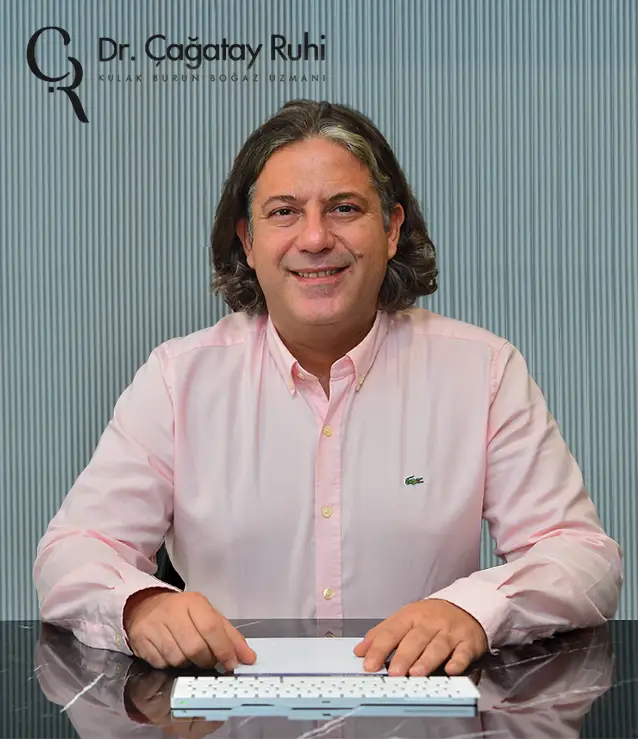
Op. Dr. Çağatay Ruhi
ENT Specialist · Rhinoplasty Surgeon
Graduate of Hacettepe University Faculty of Medicine. Practicing ENT and rhinoplasty in Istanbul Kadıköy since 2011. Specialized in rhinoplasty, revision rhinoplasty, preservation rhinoplasty and piezo surgery with over 5,000 successful cases.