


 Français
  Türkçe
 Can You Change Your Voice with Surgery?

Many people feel uneasy about their voice. Some find the voice too thick, some thin or tiring... Especially for people whose voice does not feel compatible with their identity, this situation can become not only an aesthetic but also a psychological burden. One of the most basic questions that comes to mind at this point is: Can the voice really be changed by surgery? The short answer is: Yes, it is possible. However, this process is not as simple as it is thought to be or a procedure that creates an 'instant miracle'.
How does the voice change? What Does Surgery Do?
We can think of our vocal cords as the strings of a musical instrument.
The tighter the wire, the thinner the sound; the looser and thicker it is, the fuller the sound.
In vocal aesthetic surgeries, surgeons readjust the basic tone of the voice by changing the length, tension or mass of the vocal cords. This way:
The voice is thinner and more feminine,
Or it can be made thicker and more masculine.
So what is changed is actually the physical structure inside the throat - which is why the results are usually permanent.
Which Types of Voice Surgeries Are There?
1. Voice Thinning Operations (Feminization)
These surgeries (VFS) are usually performed for people who want to make the voice thinner. It is especially preferred by trans women.
Some of the most commonly used methods:
Glottoplasty: Some of the vocal cords are brought closer together and the vibrating part is shortened. Thus, the voice automatically becomes thinner.
Cricothyroid approximation: The vocal cords are made more tense, which creates a higher-pitched voice.
After these operations, the voice is usually moved to a more feminine range.
2. Voice thickening operations (masculinisation)
It is applied more rarely. It is generally preferred in people whose voice does not become thick enough despite testosterone treatment.
The aim of these operations:
- To loosen the vocal cords,
- To provide thicker vibration.
Thus, a fuller and deeper sound is obtained.
Do These Surgeries Really Work?
Scientific studies show that
- Basic vocal pitch can change significantly after voice surgery
- People express that they feel more in tune with their voice
- Misgendering in social life can be reduced
But there is an important detail:
The operation does not only make the voice automatically 'perfect'.
Why is voice therapy still important?
Many people think:
'If I have an operation, my speech will automatically improve.'
In fact, this is not the case.
Voice therapy teaches:
- Correct breathing
- Resonance (sense of where the sound comes from)
- Emphasis, intonation and speech flow
The best results are usually achieved when surgery + voice therapy are performed together.
How is the postoperative period?
After the operation:
- It may be necessary not to talk for 1-2 weeks
- In the first few weeks, the voice may sound hoarse, hoarse or forked
- The actual established sound usually becomes apparent within a few months
In this process:
- To be patient
- To avoid shouting
- It is very important to stay away from smoking and throat irritants.
Are There Risks?
As with any surgery, there are some risks:
- Hoarseness
- Risk of permanent hoarseness (rare)
- Narrowing of the vocal range (inability to reach very thick or very thin notes)
These risks are significantly reduced when the surgery is performed by an experienced ear, nose and throat surgeon.
So, Is This Suitable For Everyone?
Voice surgery is not ideal for everyone. The selection of a candidate is usually based on
- Expectations of the person
- Existing sound structure
- Whether she has ever received voice therapy
- General health status
For some people, only voice therapy is sufficient, while for others surgery offers a more permanent solution.
Conclusion:
Yes, the voice can be changed by surgery.
This is medically possible and has been practised worldwide for many years.
However, this is not a 'new voice at the touch of a button' procedure.
It is a process that progresses with patience, proper planning and often therapy.
When performed in the right hands, voice aesthetic surgeries can make a significant contribution to the person feeling more at peace with both their voice and their identity.
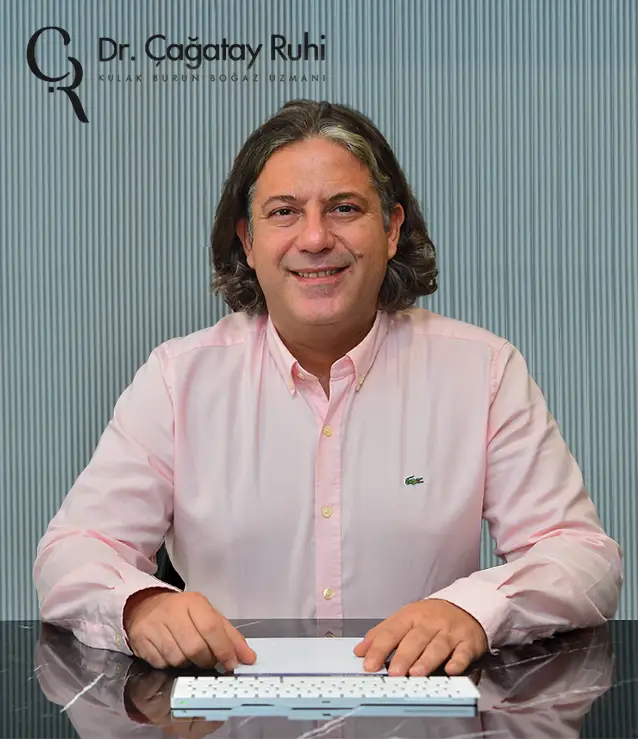
Op. Dr. Çağatay Ruhi
ENT Specialist · Rhinoplasty Surgeon
Graduate of Hacettepe University Faculty of Medicine. Practicing ENT and rhinoplasty in Istanbul Kadıköy since 2011. Specialized in rhinoplasty, revision rhinoplasty, preservation rhinoplasty and piezo surgery with over 5,000 successful cases.