

 Français
  Türkçe
 Bad Rhinoplasty:
10 Signs of a Botched Nose Job
A bad rhinoplasty is one of the hardest things a patient can face. The face is the most visible part of the body and the nose sits in the center of it. When a rhinoplasty doesn't go as planned, the impact reaches far beyond appearance. Self-confidence drops, social anxiety rises, and the constant question becomes: can this be fixed?
As a rhinoplasty surgeon who has treated many revision cases from around the world (UK, US, Germany, Middle East), I want to walk you through what actually defines a "bad rhinoplasty," the 10 most common signs, what's still within the normal healing range, and your real options.
Before we start, one critical point: do not judge your rhinoplasty result in the first 12 months. Swelling, scar tissue, and tissue settling can make a perfectly fine result look bad. Patience is the first and most important step.
What counts as a "bad" rhinoplasty?
A rhinoplasty can be called bad when the result fails on one or more of three levels:
- Aesthetic failure: Visible asymmetry, unnatural shape, disproportion to the face, scarring
- Functional failure: Worse breathing than before, chronic obstruction, valve collapse
- Psychological failure: Result drastically different from what was discussed and shown pre-op
A nose that simply needs minor refinement isn't a bad rhinoplasty. A nose that genuinely looks worse or breathes worse than before is.
10 signs of a bad rhinoplasty
These are the most common signs I see in patients seeking revision consultations. Some are subtle, others obvious.
1. Polly beak deformity
The most common bad rhinoplasty sign. A convex fullness sits just above the tip, giving the side profile a parrot-beak appearance. Causes: inadequate cartilage reduction, scar tissue buildup at the supratip area, or tip drop after surgery. It's correctable with revision.
2. Pinched or collapsed tip
The tip looks "pinched" or unnaturally narrow. Often caused by over-aggressive cartilage removal from the lower lateral cartilages. The tip loses its natural roundness and projection. Severe cases also cause breathing problems because of internal valve collapse.
3. Scooped (saddle nose) bridge
The bridge appears too concave or "scooped out." Patients describe it as "too small" or "ski-slope." Caused by over-resection of the dorsal hump. Often shows years later as tissues shift. Revision usually requires cartilage grafting (ear or rib) to rebuild the bridge.
4. Over-rotated (upturned, "piggish") tip
The tip rotates too far upward, exposing the nostrils when viewed from the front. Looks unnatural and often called "pig nose" by patients. Over-rotation can be from over-resection of caudal septum or excessive tip suturing.
5. Visible asymmetry
One side of the nose is clearly higher, wider, or shaped differently than the other. Some minor asymmetry is normal (no face is perfectly symmetric), but obvious asymmetry that didn't exist before surgery is a sign of poor execution or imperfect healing.
6. Visible bridge irregularities
You can see or feel bumps, ridges, or grooves along the bridge. Often caused by improper bone reshaping or cartilage edges that weren't smoothed. Usually visible in side profile or when shadows fall on the face.
7. Persistent breathing problems
Difficulty breathing after rhinoplasty, especially worse than before surgery, is a serious sign. Internal valve collapse, over-reduction of structural support, or untreated septal deviation are common causes. Functional revision is often necessary.
8. Visible columellar scar issues
A thick, raised, or visibly noticeable scar across the columella (the strip between nostrils). A normal columellar scar heals to nearly invisible. A bad one stays pink, raised, or wide. Sometimes treated without surgery (steroid injection, scar revision).
9. Disproportion to the face
The new nose looks "wrong" on your face: too small, too big, too narrow, doesn't match the rest of your features. Often a result of poor pre-op planning that didn't account for facial harmony. Revision aims to restore proportion.
10. Skin necrosis or significant skin damage
Rare but serious. Skin appears dark, discolored, or develops open wounds after surgery. Usually caused by excessive tissue tension, infection, or compromised blood supply (often related to smoking). Requires urgent attention.
Bad rhinoplasty or normal healing? How to tell the difference
This is critical. Many "bad rhinoplasty" worries are actually normal healing.
Normal in the first 12 months
- Significant tip swelling, especially in the first 6 months
- Tip feels firm and numb
- Minor asymmetry that gradually resolves
- Slight nasal congestion as internal swelling subsides
- Bruising around eyes (first 2-3 weeks)
- Mild changes between mornings and evenings
- Tip appears "too big" for several months
Concerning at any time
- Sudden, severe pain or new asymmetry
- Heavy bleeding that doesn't stop
- Fever, foul-smelling discharge
- Skin discoloration that worsens
- Severe breathing difficulty that wasn't present before
- Visible exposed cartilage or sutures coming through skin
If you see anything from the second list, contact your surgeon immediately. These are not normal.
How long should I wait before judging the result?
The standard answer is at least 12 months. Here's why:
- Month 1-3: Most swelling resolves but tip remains thick and unrefined
- Month 3-6: 70-80% of swelling gone. Bridge shape becomes clear. Tip still thick.
- Month 6-9: Tip definition begins to show. Subtle changes continue.
- Month 9-12: Final shape becomes apparent. Asymmetries may resolve.
- Month 12-18: Thick-skinned patients see final refinement here.
I've had patients come in at month 3 panicked about their result, and by month 12 they were happy. The opposite is also true: minor issues at month 6 sometimes become more visible at month 12 as swelling fully resolves.
What causes a rhinoplasty to fail?
From my revision practice, the most common causes:
Surgeon-related
- Inexperience: Rhinoplasty is one of the most technically demanding cosmetic surgeries. A surgeon with low volume experience makes errors more often.
- Poor pre-op planning: Not understanding facial harmony, not using 3D imaging, not properly communicating with the patient.
- Over-resection: Removing too much cartilage or bone. The "less is more" principle is often ignored.
- Choosing the wrong technique: Closed when open is needed, or vice versa.
Patient-related
- Smoking during recovery: Compromises blood flow and healing.
- Not following post-op instructions: Early sun exposure, contact sports, eyeglasses pressing on the bridge.
- Unrealistic expectations: Wanting a nose that doesn't match the facial proportions.
- Pre-existing conditions: Thin skin, weak cartilage, autoimmune disease affecting healing.
Complications
- Infection during early healing
- Hematoma (blood collection)
- Severe scarring response
- Tissue necrosis
What to do if you think you had a bad rhinoplasty
Step 1: Wait 12 months (if functional issues are not severe)
Unless you have serious breathing problems, severe infection, or another emergency, give your nose time. Judging at month 3 or 6 leads to unnecessary revision plans.
Step 2: Document your concerns
Take photos every month. Note exact issues. Track breathing function. This documentation helps the next surgeon understand your specific case.
Step 3: Get a second opinion from a revision specialist
A revision rhinoplasty specialist sees these cases regularly and knows what's realistic. They'll examine you, may order imaging, and tell you honestly what can be improved.
Step 4: Consider non-surgical options first
For minor irregularities, hyaluronic acid filler can smooth out small bumps temporarily. This isn't a permanent fix but it can show you what's possible before committing to surgery.
Step 5: Plan revision rhinoplasty if needed
If revision is the answer, choose your second surgeon even more carefully than the first. Revision rhinoplasty is technically harder due to scar tissue and limited cartilage availability. Look at revision-specific portfolios, not just primary rhinoplasty results.
Revision rhinoplasty: what to expect
If you decide on revision surgery, here are the realities:
- Timing: At least 12 months after original surgery (sometimes 18-24 months).
- Complexity: Scar tissue and weakened structures make it more difficult than primary rhinoplasty.
- Cartilage grafting: Often needed from ear (auricular) or rib (costal) to rebuild support.
- Recovery: Similar to primary rhinoplasty but swelling may take longer to resolve.
- Cost: 30-50% higher than primary rhinoplasty due to complexity.
- Success rate: 80-90% of patients see significant improvement, but absolute perfection is rare.
Detailed information: Revision Rhinoplasty Istanbul.
How to avoid a bad rhinoplasty in the first place
If you're still in the planning phase:
- Choose an experienced specialist. Rhinoplasty volume matters. Surgeons doing 200+ rhinoplasties per year develop different skills than those doing 20.
- Review their before and after gallery extensively. Look for cases similar to yours, not just impressive transformations.
- Ask about complications and how they're managed. An honest surgeon discusses risks; one who promises perfect results is concerning.
- Use 3D imaging during consultation. See projected results before surgery.
- Don't focus only on price. A "cheap" rhinoplasty can cost much more in revision surgery.
- Take time deciding. Avoid pressure-based bookings. Real surgeons don't pressure patients.
- Verify board certification. ENT-certified rhinoplasty specialists have different training than general plastic surgeons.
Why patients fly to Istanbul for revision rhinoplasty
Many of my revision patients come from countries where their primary rhinoplasty was done. They choose Istanbul for several reasons:
- High-volume revision practice (more experience with complex cases)
- Modern hospitals meeting international standards
- Cost advantage even for revision (30-50% less than UK/US/Western Europe)
- English-speaking medical teams and patient coordinators
- Comprehensive packages including accommodation and follow-up
Quality revision in Istanbul is possible when you choose the right surgeon. Avoid surgeons who specialize in primary rhinoplasty only; revision needs different expertise.
Final thoughts
A bad rhinoplasty is painful, but it's almost never the end of the story. Most cases can be improved significantly, often dramatically, with proper revision surgery and an experienced surgeon. The key steps are: wait 12 months before judging, document concerns, get expert opinions, and choose your revision surgeon carefully.
If you're concerned about your rhinoplasty result, contact Op. Dr. Çağatay Ruhi for a personal assessment. Photo-based consultation is available before traveling to Istanbul.
Related reading: Revision Rhinoplasty, Rhinoplasty Istanbul, Tip Rhinoplasty.
Frequently asked questions
Common signs include visible asymmetry, persistent breathing problems, pinched or collapsed tip, polly beak deformity, over-rotated tip, scooped bridge, or visible irregularities. Wait at least 12 months before judging because swelling masks the real result.
Wait at least 12 months. Swelling can hide problems and create false impressions of asymmetry or fullness. Thick-skinned patients may need up to 18 months. Only persistent functional issues like breathing difficulty deserve earlier attention.
A polly beak is a convex fullness just above the nasal tip that gives the side view a parrot-beak appearance. It's caused by inadequate cartilage reduction, scar tissue buildup, or tip drop. It's one of the most common bad rhinoplasty signs.
Yes, this is a common complication of bad rhinoplasty. Over-reduction of the nasal structure can cause internal valve collapse, leading to chronic obstruction. It usually requires revision rhinoplasty with cartilage grafting to rebuild support.
Revision rhinoplasty should wait at least 12 months after the original surgery. Tissues need to fully heal, swelling must resolve, and scar tissue needs to stabilize. Earlier revision is only considered for severe functional problems.
Most common causes: inexperienced surgeon, poor pre-op planning, over-resection of cartilage and bone, infection, hematoma, patient non-compliance during recovery, and unrealistic expectations not addressed before surgery.
Yes, significantly. Scar tissue, weakened structures, and previous changes make revision more complex. It often requires cartilage grafting from the ear or rib. Choose a surgeon experienced specifically in revision rhinoplasty.
Revision rhinoplasty typically costs 30-50% more than primary rhinoplasty due to its complexity. Istanbul prices are still significantly lower than UK, US, or Western Europe. Contact the clinic for an accurate quote based on your specific case.
Minor irregularities may be improved with non-surgical options like hyaluronic acid filler, but this is temporary. Significant problems (collapsed valves, severe asymmetry, breathing issues) require surgical revision.
With an experienced revision surgeon, most patients achieve significant improvement. Perfect restoration is not always possible because tissues are limited, but functional breathing and natural aesthetics can usually be restored.
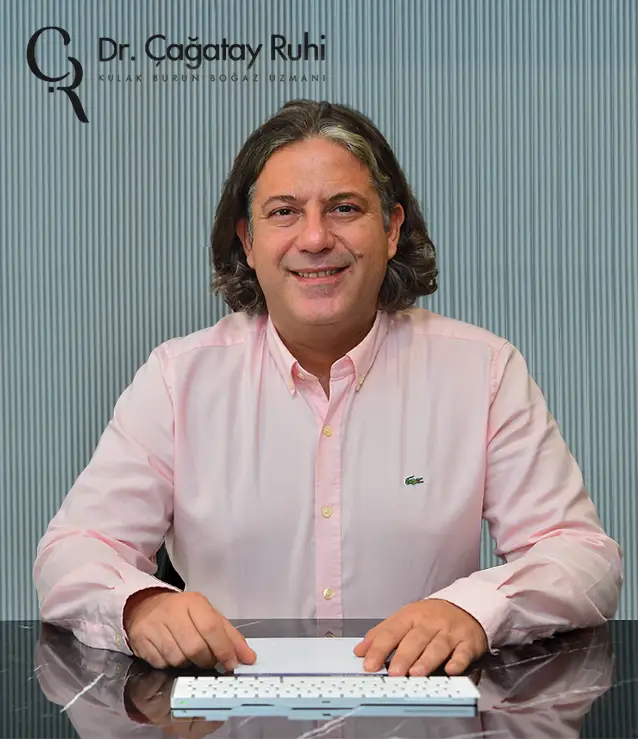
Op. Dr. Çağatay Ruhi
ENT Specialist · Rhinoplasty Surgeon
Graduate of Hacettepe University Faculty of Medicine. Practicing ENT and rhinoplasty in Istanbul Kadıköy since 2011. Specialized in rhinoplasty, revision rhinoplasty, preservation rhinoplasty and piezo surgery with over 5,000 successful cases.